No pressure, no jargon — just a conversation about your operation.
PROTECTING MARGINS
When One Bad Year Can Undo Five Good Ones
Input costs rise. Land rent doesn't go down. And the market doesn't care what it cost you to grow the crop. Protecting your margin means managing both sides of the equation — not just the price you sell at.
Talk to a Broker
We'll reach out within one business day. All conversations are confidential.
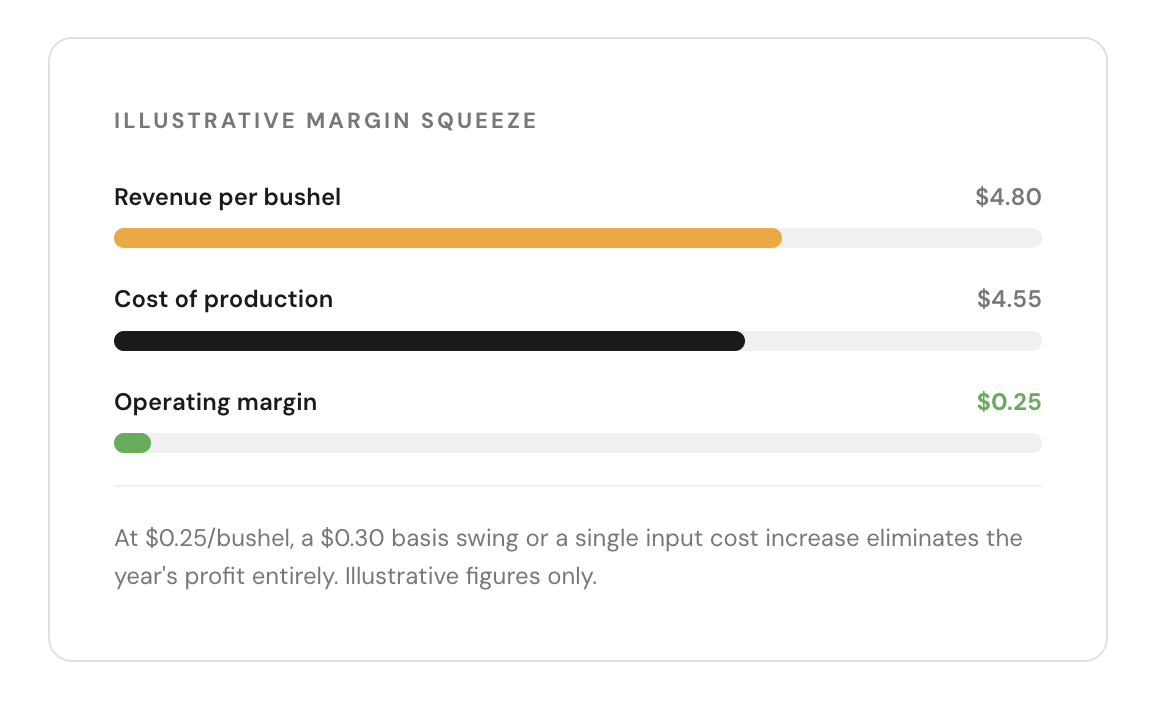
The Math Has Been Getting Harder for Years
Inputs go up. Land rent stays up. And the market doesn’t care what it cost you to grow the crop. The operations that survive aren’t necessarily the most efficient — they’re the ones managing risk on both sides of the equation, not just the price they sell at.
01
Operations only manage one side
If corn prices rise but fertilizer costs rise more, the margin still disappears. Hedging revenue without managing input exposure is half a plan.
02
Breakeven moves every year
A hedge that protected last year’s margin won’t automatically protect this year’s. Land rents, input contracts, and financing costs change — your number has to change with them.
03
One bad year doesn't have to mean crisis
Operations with a plan can absorb a down year. Operations without one can make their worst decisions — selling at the bottom, drawing on credit at the wrong moment — precisely when they can least afford to.
HOW TO THINK ABOUT THIS
Margin Protection Is a Two-Sided Problem
Protecting your margin isn't a single trade or a single decision. It's a framework — one that accounts for what you're selling, what you're spending, and the gap between them.
STEP 1
Know Your Breakeven Before You Price Anything
In our experience, most operations don’t have a current, accurate cost of production number they can actually use when making pricing decisions. Your breakeven isn’t just seed and fertilizer — it includes land rent, equipment depreciation, financing, and labor. Without it, every pricing decision is anchored on hope rather than math.
STEP 2
Hedge Revenue When the Market Offers You a Profit
Once you know your breakeven, the market tells you when to act. The psychological challenge is accepting a good price when a great price might still be possible. The financial reality is that a protected margin is worth more than an unrealized one — especially when your debt structure doesn’t give you room for a down year.
STEP 3
Manage Input Costs With the Same Discipline
Fertilizer, fuel, and feed all have futures markets. A cattle feeder who buys corn futures when feed prices are low while selling fed cattle futures when prices are strong is managing a margin — not just a price. In our experience, a two-sided approach is what has separated operations that sustained profitability from those that got caught on one side of a move.

Know Your Number.
Protect Your Year.
The operations that stay profitable through volatility aren't lucky — they're prepared. Start with a conversation about your cost of production and we'll build from there.
Who This Affects
Every Agricultural Operation
Has a Margin to Protect
The structure of the margin problem differs by operation — but the exposure is universal. Tight margins have no favorites.




LATEST ARTICLES
Check out the latest industry articles
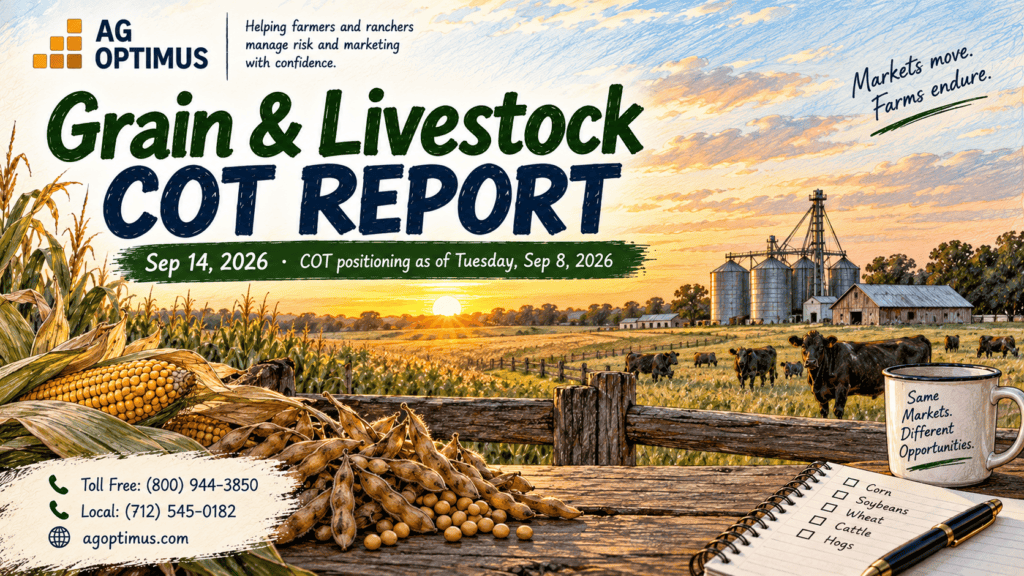
Grain & Livestock COT Report — Sep14, 2026 · COT positioning as of Tuesday, Sep 8, 2026
Grain & Livestock COT Report — Sep14, 2026 · COT positioning as of Tuesday, Sep 8, 2026

WASDE Sep 2026 Actual vs. Estimates
WASDE Sep 2026 Actual vs. Estimates
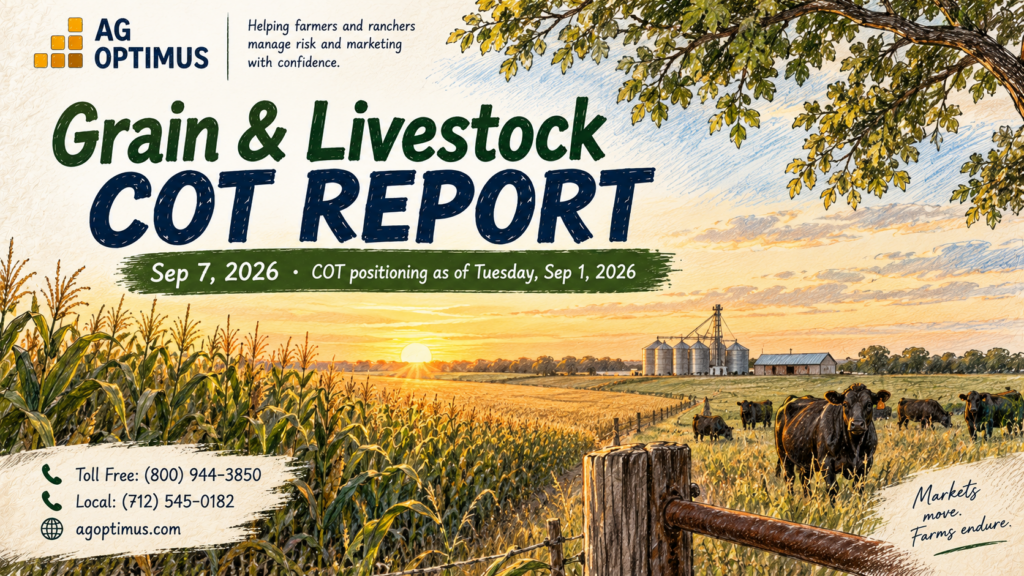

Why a Weather Forecast in Brazil Can Move Your Soybean Bid
Why a Weather Forecast in Brazil Can Move Your Soybean Bid
FAQs
Common questions about protecting farm margins, managing input cost exposure, and building a risk management plan that works on both sides of the equation.
What does it mean to hedge both sides of my margin?
A one-sided hedge only protects the price you sell at — but if your input costs rise at the same time, the margin still disappears. A two-sided approach means locking in your selling price when it covers your costs, while also managing exposure to major inputs like corn, diesel, or fertilizer when favorable prices are available. For grain farmers, that’s primarily the output side. For cattle feeders and processors, both sides matter equally.
How do I figure out my actual cost of production?
Your cost of production per bushel includes everything it takes to produce a unit of output — seed, fertilizer, chemicals, fuel, land rent, equipment depreciation, labor, and financing costs. Many producers undercount by leaving out depreciation or land opportunity cost. Your broker can walk through this with you, or you can use a farm financial calculator to build a realistic number before making any pricing decisions.
What's the difference between protecting price and protecting margin?
Protecting price means locking in what you’ll receive for your commodity. Protecting margin means ensuring the gap between what you receive and what it cost you to produce remains positive. They’re related but not the same. A $5.00 corn price is good in one year and barely breakeven in another, depending on what inputs cost. Margin protection requires knowing both sides of the equation — and updating that math every year.
Can smaller operations benefit from a margin protection strategy?
Yes — and arguably more so than larger operations, because smaller farms typically have less financial cushion to absorb a bad year. Micro and mini futures contracts have lowered the minimum hedge size significantly, making it practical to hedge meaningful portions of a smaller operation’s production. The strategic logic — know your breakeven, price above it when you can — applies at any scale.
Is margin protection relevant to grain elevators?
Grain elevators are the most margin-dependent operation in the supply chain. Their business model runs on basis spreads, carry charges, and service fees — all of which compress under adverse market conditions. An inverted market, a weak carry structure, or a sudden basis collapse can eliminate months of built-up margin quickly. Elevators benefit from active basis monitoring and hedging strategies specifically designed around their carry and origination positions.