What Is a Commodity Broker?
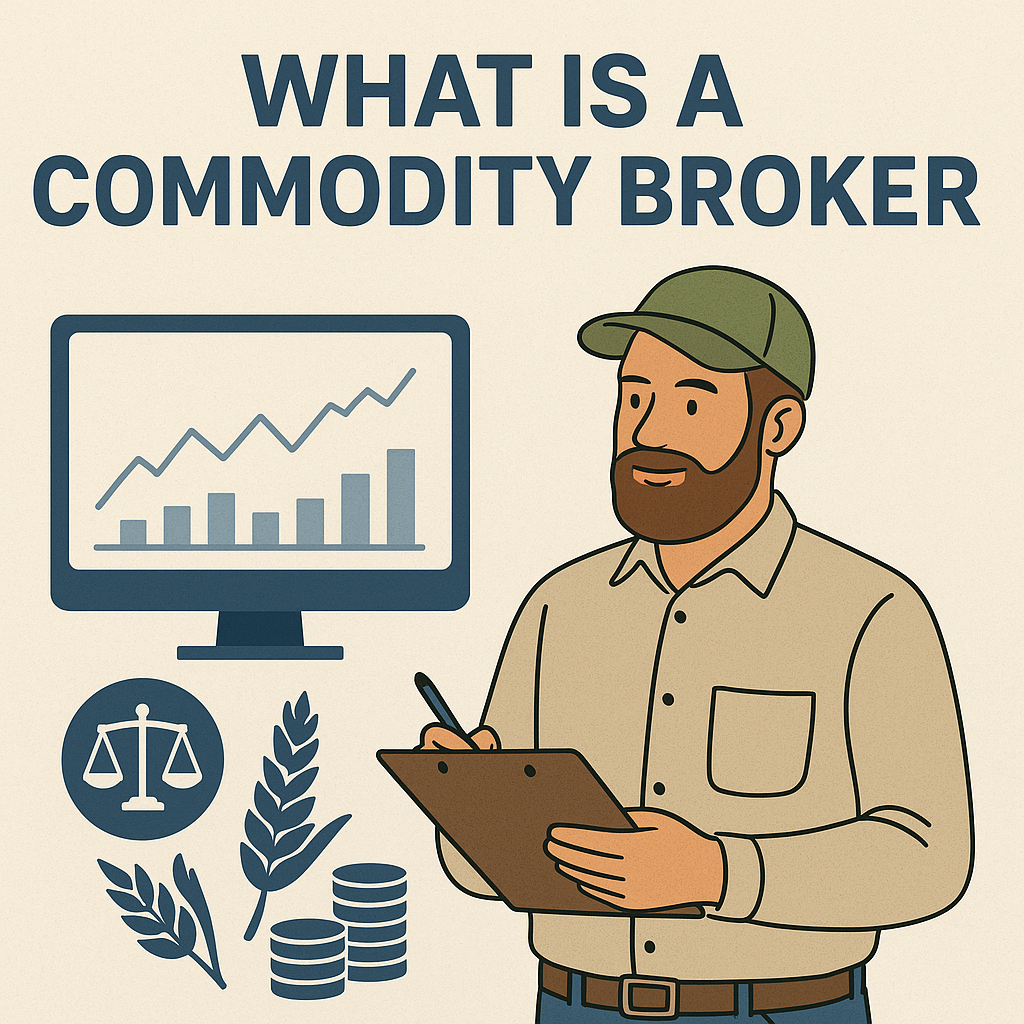
A commodity broker acts as a bridge between agricultural clients and regulated futures exchanges. They execute trades, work within CFTC and NFA rules, and manage margin requirements.
Agricultural commodity brokers focus on risk management, not speculation. Their purpose is to help producers manage income and address unpredictable commodity prices.
What a Commodity Broker Does for Agricultural Businesses
- Executes exchange-traded futures and options contracts for agricultural producers.
- Provides access to risk management tools, including:
- Futures contracts: Agreements to buy or sell a commodity at a set price on a future date.
- Options contracts: Rights, but not obligations, to buy or sell at a specific price, for the cost of a premium that is at risk.
- Basis contracts: Agreements that lock in the difference between a local cash price and the futures price. This lets producers fix part of the price now while retaining flexibility to set the rest later.
- May offer market insights, hedge performance tracking, and educational support.
How Agricultural Commodity Brokers Differ from Other Brokers
Agricultural commodity brokers specialize in futures markets tied to real physical production — corn, soybeans, cattle, hogs, and more. Their clients hedge actual production risk, while financial brokers often focus on speculative trades in metals, energy, or stock indices.
Example 1:
A grain producer works with a commodity broker to sell December corn futures before harvest. If prices drop, gains on the hedge can help offset lower cash prices.
Example 2:
A dairy processor uses an agricultural commodity broker to buy feed futures, aiming to stabilize input costs as prices rise.
Sample Case Study: Managing Feed Costs Through a Commodity Broker
A Midwestern cattle rancher faced rising feed costs during a drought-driven corn rally. Working with an agricultural commodity broker, they purchased corn futures as a hedge. When feed prices increased, gains from the futures position helped offset higher cash expenses in this example. Outcomes vary, and hedging does not guarantee a profit or prevent a loss.
This example shows how futures markets can be used proactively rather than reactively.

Common Misconceptions About Commodity Brokers
- “Commodity brokers are mainly for speculators.”
Many assume brokers only serve active traders. In reality, agricultural commodity brokers often work with farmers, ranchers, and cooperatives to manage production-based price risk, not speculation. They focus on managing income, not chasing short-term gains. - “Commodity brokers have hidden fees or markups.”
Some clients worry about unclear pricing or unexpected deductions. Regulated brokers must disclose all commissions, exchange, and clearing fees upfront. Producers can always request a written cost breakdown before placing a single trade. - “Commodity brokers don’t understand farming realities.”
A common concern among producers is that brokers don’t grasp harvest schedules, basis risk, or local cash flow needs. That’s why it’s important, in our opinion, to work with an agricultural commodity broker who knows how production timelines and weather affect market decisions. - “Commodity brokers only react after the market moves.”
Some clients fear they’ll get calls only after volatility hits. In practice, good brokers provide proactive communication, alerting clients to upcoming reports, seasonal trends, and potential margin impacts before markets shift. - “Working with a broker adds complexity.”
On the contrary, a well-organized broker relationship can simplify risk management. Brokers handle trade execution, margin tracking, and reporting, allowing clients to focus on production while staying informed and in control.
Benefits of Using a Commodity Broker for Agricultural Businesses
- Price Risk Management: Help manage revenue exposure to market swings.
- Direct Market Access: Trade on regulated futures exchanges.
- Specialized Agricultural Insight: Brokers understand seasonality, basis relationships, and crop marketing patterns.
- Regulatory Oversight: Operate under CFTC and NFA supervision.
- Operational Efficiency: Manage orders, statements, and margin requirements in one place.
Common Mistakes When Choosing a Commodity Broker (and How to Avoid Them)
1. Ignoring Regulation
Unregistered brokers may lack oversight.
✅ Always verify registration on the NFA BASIC website.
2. Choosing Based Only on Fees
Low-cost service can mean limited support or weaker execution.
✅ Balance affordability with reliability and communication.
3. Overlooking Agricultural Expertise
Some brokers lack experience in farm-specific markets.
✅ Choose a broker who understands grains, livestock, and seasonal cycles.
4. Misunderstanding Margins
Margins can shift quickly during high volatility.
✅ Ask how margin calls are handled during USDA reports or crop surprises.
5. Poor Communication
Delayed updates can lead to missed opportunities.
✅ Work with a broker who provides timely reports and proactive outreach.
Latest Trends in Agricultural Commodity Trading
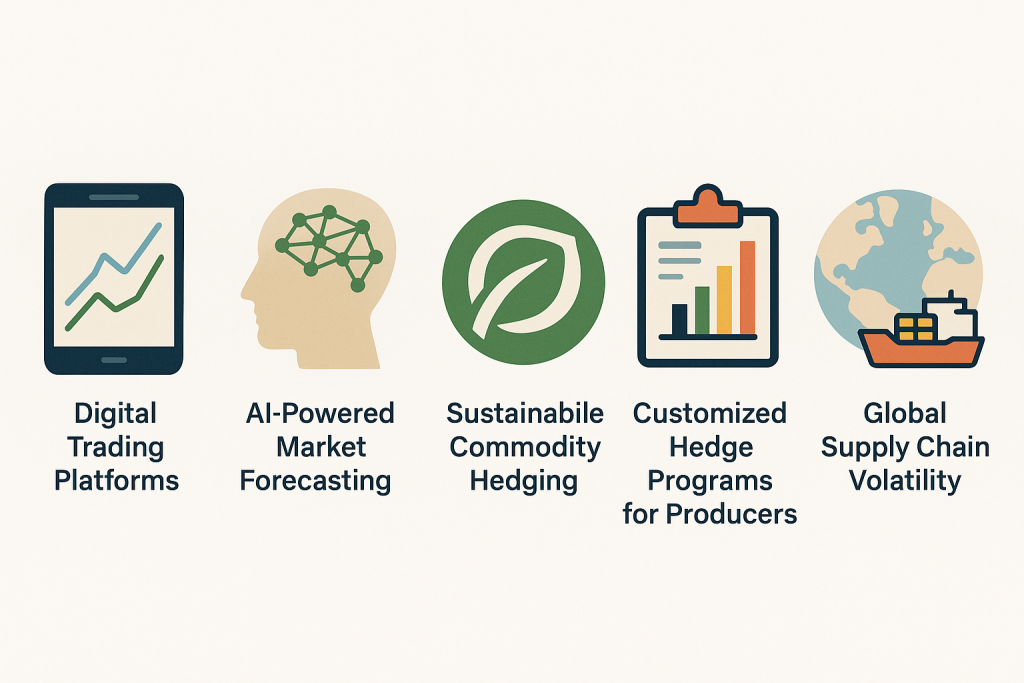
- Digital Trading Platforms: Brokers now offer web and mobile access for live position tracking and reporting.
- AI-Powered Market Analysis: Artificial intelligence tools are helping identify price trends and volatility risk.
- Sustainable Commodity Hedging: Growth in carbon credits and renewable fuel contracts adds new opportunities for producers.
- Customized Hedge Programs for Producers: Agricultural commodity brokers are developing tailored hedge solutions that integrate futures, options, and basis management strategies matched to each operation’s production scale.
- Global Supply Chain Volatility: Experienced brokers now help clients manage cross-hedging to address export and logistics risks.
How to Choose the Right Commodity Broker for Agriculture
1. Regulation and Fund Safety
Work only with a commodity broker registered with the CFTC and NFA. Client funds must be kept in segregated accounts under CFTC Rule 1.20.
2. Fees, Margins, and Transparency
Ask for full written disclosure of commissions, exchange fees, and clearing charges. Understand how margin levels change with market volatility.
3. Technology and Execution Quality
Fast, stable trading systems are important for real-time market decisions. Reliable brokers provide easy-to-use platforms and responsive customer support.
Commodity Broker Evaluation Checklist for Producers
| Evaluation Factor | Why It Matters | Minimum Standard |
|---|---|---|
| CFTC/NFA Registration | Ensures legal and ethical oversight | Listed on NFA BASIC |
| Fund Segregation | Protects deposits from misuse | Follows CFTC Rule 1.20 |
| Transparent Fees | Prevents unexpected costs | Written fee schedule |
| Agricultural Expertise | Aligns hedging with farm operations | Experience in grain/livestock markets |
| Platform Reliability | Ensures accurate order execution | Stable and secure technology |
| Hedging Support | Improves price-risk planning | Dedicated hedge-desk or advisory team |
Frequently Asked Questions About Commodity Brokers
Q: What does a commodity broker do for agricultural producers?
A commodity broker executes trades, monitors margins, and provides reporting that helps producers hedge against price volatility in futures and options markets.
Q: How do brokers and clients work together to make trading decisions?
A commodity broker collaborates with clients to design and execute hedging plans. Brokers explain available tools and timing, and clients make the final call, so every trade fits the operation’s financial goals.
Q: How is a commodity broker different from a commodity trading advisor (CTA)?
A commodity broker executes client-directed trades. A commodity trading advisor (CTA) manages trades and risk exposure on a discretionary basis. Producers seeking control and transparency often prefer brokers.
Q: What challenges do agricultural producers face in futures trading?
Common issues include margin calls, delivery timing, and understanding basis risk. A commodity broker helps align futures positions with production and sales cycles to reduce disruptions.
Q: What is basis risk, and how does a broker help manage it?
Basis is the difference between the local cash price and the futures price. Brokers guide clients on when to lock the basis to help stabilize returns while leaving room for upside potential.
Q: How can I measure a commodity broker’s effectiveness?
Look for execution accuracy, communication quality, and transparent statements. Good brokers confirm trades quickly and explain market or margin changes clearly.
Q: What fees should I expect when working with a commodity broker?
Expect per-contract commissions, clearing, and exchange fees. All costs should be disclosed before funding your account.
Q: How can I verify if a broker is legitimate?
Visit basic.nfa.futures.org to check a broker’s registration, disciplinary record, and background.
Key Features of AgOptimus Commodity Brokerage Services
- Dedicated hedge-desk support focused on the agricultural supply chain.
- Regulated access to commodity futures and options via approved FCM partners.
- Specialized agricultural commodity broker expertise across grains, livestock, and softs.
- Transparent fees, margin policies, and reporting.
- Custom risk management programs for producers, processors, and cooperatives.
- Multi-platform systems for trade monitoring.
Partner with a Commodity Broker Who Understands Agriculture
At AgOptimus, we help producers, ranchers, and agribusinesses manage price risk with structured hedging strategies designed around your operation, production cycle, and cash flow needs. Contact our hedge desk today to discuss a customized futures and options plan that supports your marketing goals.
AgOptimus is a registered DBA of Optimus Futures LLC, an NFA Member and CFTC-registered Introducing Broker [NFA ID 0481133]. Trading futures and options involves substantial risk of loss and is not suitable for all investors. Options buyers risk the entire premium paid. Hedging does not guarantee a profit or prevent a loss. The examples above are hypothetical and for educational purposes only. Past performance is not necessarily indicative of future results.