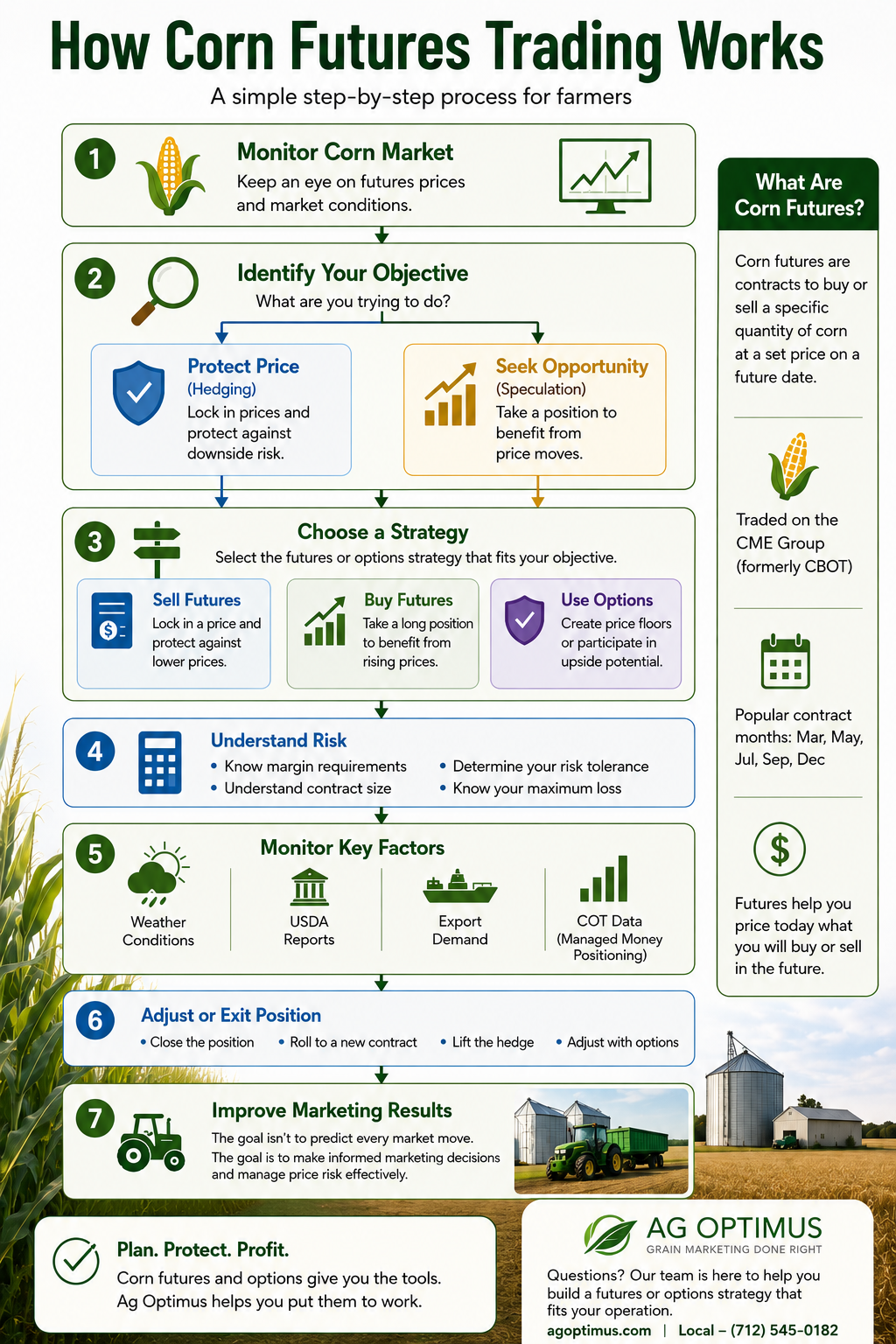
Corn futures trading offers investors and agricultural producers a way to participate in one of the world’s most important commodity markets. This expanded guide will provide you with essential information on corn futures trading, helping you make informed decisions.
Understanding Corn Futures
Corn futures are standardized contracts that allow traders to buy or sell a specific amount of corn at a predetermined price on a future date. These contracts are primarily traded on the Chicago Board of Trade (CBOT), now part of CME Group.
Corn Futures Contract Specifications
Product Symbol: ZC
Venue: Chicago Board of Trade (CBOT)
Contract Size: 5,000 bushels
Price Quotation: Cents per bushel
Tick Size: 1/4 of one cent per bushel ($12.50 per contract)
Contract Months: March (H), May (K), July (N), September (U), December (Z)
Trading Hours: Sunday – Friday: 7:00 p.m. – 7:45 a.m. CT and 8:30 a.m. – 1:20 p.m. CT
Last Trading Day: The business day prior to the 15th calendar day of the contract month
Delivery: Physical delivery
Grade and Quality Specifications: No. 2 Yellow Corn at contract price, No. 1 Yellow Corn at 1.5 cent/bushel premium
Delivery Locations: Chicago and Burns Harbor, Indiana Switching District; Toledo, Ohio; St. Louis-East St. Louis and Alton, Illinois
Position Limits: CBOT Position Limits in effect
Daily Price Limit: $0.40 per bushel, expandable to $0.60 and then to $0.90 when market conditions warrant
Note: Contract specifications may change. Always verify current information with your broker or the exchange.
Factors Influencing Corn Prices
To trade corn futures, it’s crucial to understand the factors that drive price movements:
- Weather conditions in major corn-producing regions
- Global supply and demand dynamics
- Government policies and subsidies
- Energy prices, particularly ethanol production
- Currency exchange rates
- Geopolitical events affecting trade
- Technological advancements in agriculture
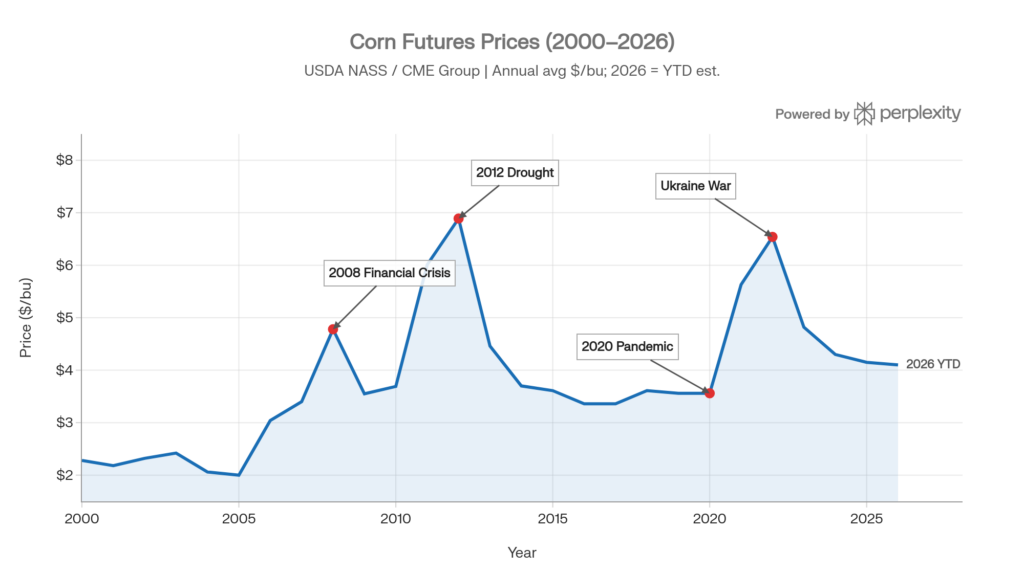
This graph illustrates the historical price movements of corn futures from 2000 to 2023, highlighting major events that significantly impacted the market. Understanding these historical trends and their causes can help traders anticipate future price movements.
Steps to Trade Corn Futures
- Choose a broker: Select a reputable commodity broker that offers corn futures trading.
- Open an account: Complete the required paperwork and fund it. Be prepared to meet minimum deposit requirements.
- Develop a trading plan: Determine your investment goals, risk tolerance, and strategy. This should include entry and exit points, position sizing, and risk management rules.
- Analyze the market: Use technical and fundamental analysis to identify trading opportunities. This may involve studying price charts, crop reports, and economic indicators.
- Place your trade: Execute your buy or sell order through your broker’s platform. Familiarize yourself with different order types (market, limit, stop) to effectively manage your entries and exits.
- Monitor and manage: Keep track of your position and adjust as needed. This may involve rolling over contracts, hedging, or closing positions based on market movements.
Trading Strategies for Corn Futures
Corn futures trading requires a well-thought-out strategy. Here are some popular approaches:
- Trend following involves identifying and trading in the direction of long-term price trends. This can be done using moving averages, trendlines, or other technical indicators.
- Spread trading: Simultaneously buy and sell related corn futures contracts to profit from price differentials. Common spreads include calendar spreads (between different contract months) and inter-commodity spreads (e.g., corn vs. soybeans).
- Seasonal trading: Capitalize on recurring price patterns tied to annual crop cycles. For example, corn prices often exhibit certain tendencies during planting and harvesting seasons.
- Options strategies: Use corn options to hedge your futures positions or generate income. This can include strategies like covered calls, protective puts, or straddles.
- Mean reversion: Trade is based on the assumption that prices will return to their average after extreme movements.
- Fundamental analysis: Make trading decisions based on supply and demand factors, including crop reports, weather forecasts, and global economic conditions.
Long and Short Positions in Corn Futures: Hedging and Trading
Corn futures can be used for both hedging and speculative trading, with market participants taking either long or short positions depending on their needs and market outlook.
Hedging with Corn Futures
Hedging involves taking a position in the futures market opposite to a position in the physical market to help manage the risk of adverse price movements.
Long Hedging
Long hedging involves buying corn futures contracts to help manage the risk of potential price increases in the physical market.
Examples of companies that may need to go long for hedging:
- Food Manufacturers: A company like Kellogg’s, which uses corn in many of its cereal products, might buy corn futures to set a price for future corn purchases. This helps manage the risk of rising corn prices.
- Livestock Producers: Cattle feedlots or large-scale poultry operations, such as Tyson Foods, might go long on corn futures to help manage increasing feed costs.
- Ethanol Producers: Companies like Archer Daniels Midland (ADM) that produce ethanol from corn might use long hedges to help manage their input costs.
Short Hedging
Short hedging involves selling corn futures contracts to help manage the risk of potential price decreases in the physical market.
Examples of companies that may need to go short for hedging:
- Corn Farmers: Individual farmers or large agricultural cooperatives, such as CHS Inc., might sell corn futures to lock in a price for their upcoming harvest, helping manage the risk of falling corn prices.
- Grain Elevator Operators: Companies like Cargill that buy corn from farmers and store it for later sale might short hedge to help manage the risk of price declines while the corn is in storage.
- Seed Companies: Businesses like Corteva Agriscience that produce corn seed might use short hedges to help manage the value of their inventory against price decreases.
Speculative Trading in Corn Futures
While hedgers use futures to reduce risk, speculators aim to profit from price movements in the corn market. They can take either long or short positions based on their market analysis and predictions.
- Going Long: A trader who believes corn prices will rise might buy corn futures contracts. They profit if prices increase and can sell the contracts at a higher price.
- Going Short: If a trader anticipates corn prices will fall, they might sell corn futures contracts. They profit if prices decrease and they can buy back the contracts at a lower price.
Examples of speculative traders:
- Commodity Trading Advisors (CTAs)
- Hedge funds specializing in agricultural commodities
- Individual traders or investors
Key Differences Between Hedging and Speculative Trading
- Risk Profile: Hedgers aim to reduce risk in their physical market position, while speculators accept risk in hopes of making a profit.
- Market Involvement: Hedgers typically participate in the physical corn market, whereas speculators often do not.
- Profit Motive: For hedgers, a loss in the futures market is typically offset by a gain in the physical market. Speculators, however, directly profit or lose based on their futures market position.
- Position Duration: Hedgers often hold their positions until their physical market transaction occurs, whereas speculators may enter and exit positions more frequently in response to market conditions.
Understanding these different uses of corn futures is crucial for all market participants. It helps explain market dynamics and the diverse motivations driving corn futures prices.
Take the Next Step in Corn Futures Trading
Now that you’ve gained a comprehensive understanding of corn futures trading, you may be ready to explore this dynamic market further. Whether you’re a farmer looking to hedge your crop, a food manufacturer aiming to manage supply costs, or an investor interested in new opportunities, we’re here to help.
Our team of experienced commodity brokers and agricultural market specialists can provide guidance tailored to your specific needs and goals.
Call us today at (800) 944-3850 to discuss your corn trading strategy.
We can assist you with:
- Developing customized hedging or trading strategies
- Implementing risk management techniques
- Staying informed about crucial market trends
Whether you’re looking to manage your agricultural business’s exposure to price volatility or explore market opportunities, our team is ready to support your corn futures trading journey.
Take action now: Call (800) 944-3850 to speak with a corn futures trading specialist.
Remember, futures trading involves substantial risk and is not suitable for all investors. Ensure you understand the risks involved and consider your financial situation before trading.
Frequently Asked Questions
What is a corn futures contract?
A corn futures contract is a standardized agreement to buy or sell a specific amount of corn at a predetermined price on a future date. The standard contract covers 5,000 bushels and trades on the Chicago Board of Trade (CBOT), now part of CME Group, under the symbol ZC. Contract specifications can change, so always verify current details with your broker or the exchange.
What factors move corn prices?
Corn prices are driven by weather in major growing regions, global supply and demand, government policy and subsidies, energy prices (especially ethanol), currency exchange rates, geopolitical events affecting trade, and advances in agricultural technology. Because so many forces interact, prices can move quickly and in ways that are hard to predict.
What is the difference between hedging and speculating in corn futures?
Hedgers have a position in the physical corn market and use futures to help manage the risk of adverse price moves — a loss on the futures side is typically offset by a gain on the physical side, and vice versa. Speculators have no physical position; they accept risk in the hope of profiting directly from price movements. Hedgers usually hold positions until their physical transaction occurs, while speculators may trade in and out more frequently.
When would a buyer use a long hedge versus a short hedge?
A long hedge means buying futures to help manage the risk of rising prices — used by corn buyers such as food manufacturers, livestock producers, and ethanol plants. A short hedge means selling futures to help manage the risk of falling prices — used by those who will sell physical corn, such as farmers, grain elevators, and seed companies. The direction of the hedge matches the risk the business is trying to manage.
What are common corn futures trading strategies?
Common approaches include trend following (trading in the direction of long-term price trends), spread trading (calendar or inter-commodity spreads such as corn versus soybeans), seasonal trading tied to planting and harvest cycles, options strategies such as covered calls and protective puts, mean reversion, and fundamental analysis based on supply, demand, weather, and crop reports. No strategy guarantees a profit, and each carries its own risks.
How do I start trading corn futures?
The basic steps are: choose a reputable commodity broker, open and fund an account, develop a trading plan covering goals, risk tolerance, entry and exit points, and position sizing, analyze the market using technical and fundamental tools, place your trade using appropriate order types, then monitor and manage the position over time. Futures trading involves substantial risk and is not suitable for all investors.