TL;DR
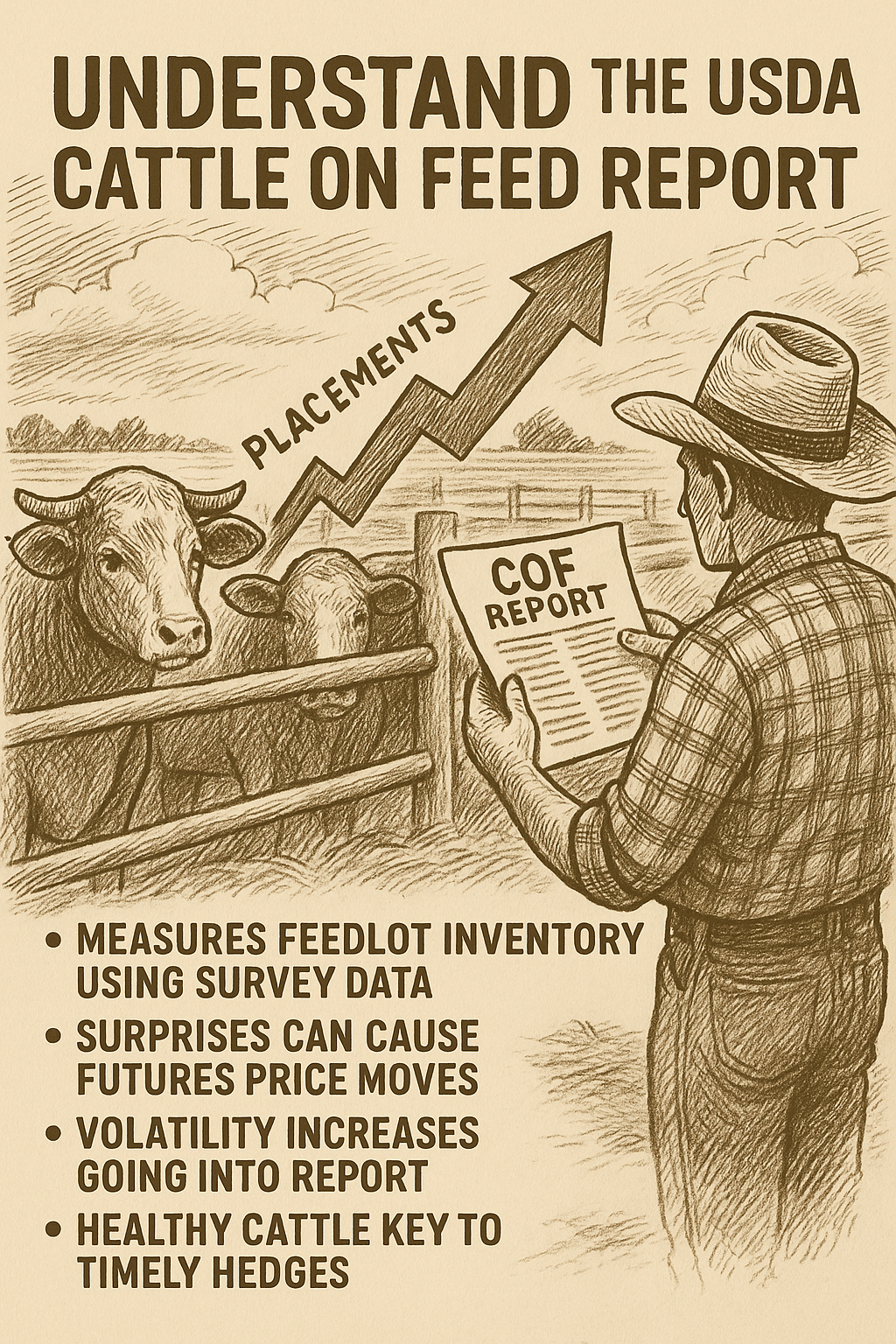
The USDA Cattle on Feed (COF) report drives cattle futures because it reveals real supply: placements, marketings, and on-feed inventory. What matters isn’t the number itself—but how it compares to pre-report estimates.
Heavy placements → bearish. Light placements → bullish.
The best hedging opportunities usually come before the report when volatility is low. Healthy cattle, predictable finish dates, and correct contract-month alignment determine hedge effectiveness.
Introduction
The USDA Cattle on Feed report is one of the most influential pieces of information in the cattle markets. It provides a clear snapshot of how many cattle are currently in U.S. feedlots, how many were recently placed, and how many were marketed. Because these numbers directly affect short-term beef supply, the report often becomes a key driver of price movement in Live Cattle and Feeder Cattle futures.
Feeders, ranchers, packers, and futures traders all pay close attention to this report because it’s one of the few data sets that shows real-time shifts in cattle flow. Higher-than-expected placements can signal larger future supplies, while lower marketings may hint at slower beef movement. When the report comes in different from expectations, the futures market can react quickly — sometimes sharply — creating pockets of volatility around the release.
By tracking Cattle on Feed, producers gain a better understanding of near-term supply pressure, potential basis changes, and whether hedging adjustments may be needed before or after the report. It remains a core tool for anyone who wants to stay ahead of cattle market swings.
What the Cattle on Feed Report Measures
The USDA COF report tracks feedlots with 1,000+ head capacity and reports three key numbers:
1. On-Feed Inventory
How many cattle are currently in feedlots.
2. Placements
New cattle entering feedlots — a forward indicator of supply 120–240 days out.
3. Marketings
Cattle shipped out for slaughter — a backward look at how fast cattle are leaving the yards.
Placements shape future supply.
Marketings explain recent movement.
On-feed inventory shows overall pressure.
How USDA Calculates COF Numbers
USDA surveys thousands of feedlots every month. They collect:
- Head count by lot
- Placement numbers
- Placement weights
- Fed cattle shipped
- Death loss (embedded in inventory calculations)
Data is verified through:
- Packing plant slaughter totals
- Interstate livestock movement
- Historical survey patterns
- Adjustments for weather disruptions
This is why COF is trusted — it is built from real, physical inventory.
Why the Market Reacts So Suddenly
Futures don’t react to the report numbers.
They react to whether the numbers are above or below expectations.
Analysts publish pre-report estimates through:
- Reuters
- DTN/Progressive Farmer
- CME bulletins
- Ag economics university reports
- Commodity brokerage estimate sheets
If USDA surprises the trade:
- Placements higher = bearish
- Placements lower = bullish
It’s the surprise that moves the market.
Bullish vs. Bearish: What Feeders Should Look For
Cattle on Feed Signals Table
| Category | Bullish Signal | Bearish Signal |
|---|---|---|
| Placements | Lower than estimates | Higher than estimates |
| Placement Weights | More light calves | More heavy feeders |
| Marketings | Faster than expected | Slower than expected |
| On-Feed Inventory | Shrinking | Increasing |
| Basis Trends | Strong basis | Weak basis |
| Supply Outlook | Tight supply | Abundant supply |
| Feedyard Conditions | Good health, steady gains | Weather delays, death loss |
| Futures Impact | Supports deferred months | Pressures near-term months |
Where to Find COF Estimates Before Release
You can track expectations from:
- CME pre-Report summaries
- DTN/Reuters analyst surveys
- Broker outlook sheets
- University ag economists
- Private cattle market newsletters
The smartest feeders know:
Positioning before the report matters more than reacting afterward.
How to Manage Risk Going Into a COF Report
COF week increases volatility. If you want protection, the most cost-effective time is before the USDA releases the numbers.
Tools cattle feeders typically consider:
1. Put Options (Price Insurance)
- No margin calls
- Protects downside
- Keeps upside open
2. Short Futures
- Locks in a price
- Requires margin
- Strong for defined marketing windows
3. Structured Hedges
- Collars
- Synthetic puts
- Three-way spreads
Used when feeders want a lower premium cost.
Healthy cattle = the foundation of correct hedging.
Cattle health is key! If cattle are behind, sick, or delayed, choosing the correct futures month becomes harder.
Read how healthy cattle make a difference in marketing: https://agoptimus.com/how-healthy-cattle-create-marketing-certainty/
Understanding Placement Weights
Placement weight tells the story:
Lightweight placements (under 700 lbs)
→ Bearish deferred contracts
→ Bullish immediate months
→ More supply later
Heavy placements (over 800 lbs)
→ Bearish nearby months
→ Faster beef supply impact
Placement weights shape the timing of futures pressure.
How Often Does the COF Report Come Out
- Monthly, usually between the 20th–25th
- Always released at 2:00 PM Central
- Available free at the USDA NASS website
Many feeders print it and circle placements first — because everything else depends on them.
FAQ: Cattle on Feed
1. Why does Cattle on Feed matter so much?
It explains future beef supply better than any other monthly report.
2. Which number should feeders watch first?
Placements — especially placement weights.
3. How does health affect hedging around Cattle on Feed?
Healthy cattle hit predictable finish dates, allowing accurate hedge alignment with futures months.
4. Should feeders hedge before or after Cattle on Feed?
Not advice — but historically:
Before = cheaper protection
After = volatility spikes
5. Does extreme weather change Cattle on Feed results?
Yes — blizzards, heat, and mud slow marketings and skew placements.
6. Can Cattle on Feed move basis?
Absolutely. Overplacement can hurt basis; light placements often strengthen it.
Ag Optimus
Talk Through COF (cattle on Feed) Strategy With Brokers Who Actually Work With Feeders
If you want help interpreting Cattle on Feed, aligning contract months, or understanding how placement weights impact your feedyard, our team at Ag Optimus can walk you through the numbers.
We work with cattle feeders every day — and we understand gain patterns, finish windows, feed costs, and market timing.
Call before the next Cattle on Feed Report to position yourself!
📞 Toll free (800) 944-3850 Local: (712) 545-0182
🌐 www.agoptimus.com