
Introduction
Commodity brokers, often working for specialized firms, play a crucial role in assisting farmers to manage price risk when selling grain through local grain elevators. By facilitating hedging strategies using futures contracts and options, these brokers help their clients, such as farmers and grain elevators, protect their income against fluctuations in market prices. This process enables farmers to work effectively with grain elevators to store and market their crops while minimizing financial uncertainty.
This section explains how commodity brokers support farmers in hedging price risk in collaboration with grain elevators. It covers the hedging process, its benefits, and the practical steps involved, while also addressing the business aspects of commodity trading and risk management, providing clear, factual information suitable for educational and training purposes.
Understanding Grain Elevators and the Cash Market
Grain elevators are a vital link in the agricultural supply chain, acting as central hubs in the cash market where farmers can sell grain and buyers can purchase it for processing or feeding livestock. These facilities not only store and handle large quantities of grain but also serve as key players in connecting local producers to broader commodity markets. A commodity broker, including specialized cash grain brokers, works closely with grain elevators to facilitate smooth transactions and help manage the risks associated with fluctuating grain prices.
In the cash market, grain elevators purchase grain directly from farmers, paying the current market price. They then sell this grain to buyers such as food processors, feed companies, or exporters. Because grain prices can change rapidly due to shifts in supply and demand, grain elevators face significant price risk. To manage this, they often turn to the futures market, using futures contracts to hedge their positions. By taking a short position in the futures market, a grain elevator can offset potential losses if grain prices fall after it purchases grain from farmers.
Commodity brokers play a crucial role in this process, providing expertise and access to the futures markets. They may work with futures commission merchants to execute trades and ensure that all transactions comply with industry regulations set by organizations like the National Futures Association. Registered commodity representatives help oversee these activities, ensuring that all trades are properly managed and reported.
Introducing brokers can also support grain elevators by offering additional market insights and helping them navigate the complexities of commodity trading. For example, if a grain elevator is concerned about a potential drop in corn prices, a commodity broker might recommend selling futures contracts to lock in a favorable price, thereby hedging against market volatility.
Understanding how grain elevators operate within the cash market—and how they use futures contracts to hedge risk—is essential for anyone involved in commodity trading. Whether you are a farmer looking to sell grain or a buyer seeking to purchase grain, working with experienced commodity brokers can help you make informed decisions and manage risk effectively in the ever-changing world of commodity markets.
The Role of Commodity Brokers in Hedging Through Grain Elevators
Commodity brokers act as intermediaries connecting farmers, grain elevators, and futures markets. When farmers deliver grain to elevators, they face the risk of price changes before the grain is sold. Commodity brokers help by executing trades in futures markets that offset this risk for their clients, allowing farmers to lock in prices. In this process, the broker is serving the client, whether that is the farmer or the elevator, to manage their exposure to price fluctuations.
Grain elevators typically hedge their own price risk by taking opposite positions in futures markets. As part of the grain hedging process, elevators may assume price risk to facilitate these transactions. Brokers coordinate these hedge positions for both elevators and farmers to manage risk efficiently, leveraging their market analysis and risk management expertise.
How Hedging Works
When a farmer sells grain to a grain elevator, the elevator is buying the physical commodity from the farmer and sells futures contracts for future delivery to hedge its price risk. The farmer can also take a short position in futures contracts through a commodity broker to lock in a selling price. For example, delivering 5,000 bushels of corn or wheat to an elevator corresponds to one futures contract on the Chicago Board of Trade. The farmer’s short futures position protects against price declines by offsetting cash-market losses with gains in the futures market. Buying futures contracts is also a common risk management strategy, allowing market participants to lock in purchase prices and manage exposure to price fluctuations.
Benefits of Hedging with Commodity Brokers
- Protects farmers from adverse price movements
- Provides access to futures markets that farmers may not reach directly
- Offers expert market analysis and timing advice
- Coordinates hedging activities with grain elevators to align risk management
- Emphasizes the need to focus on the basis and carry strategies for optimal results
- Allows farmers to participate in risk management strategies
Practical Steps for Hedging Grain
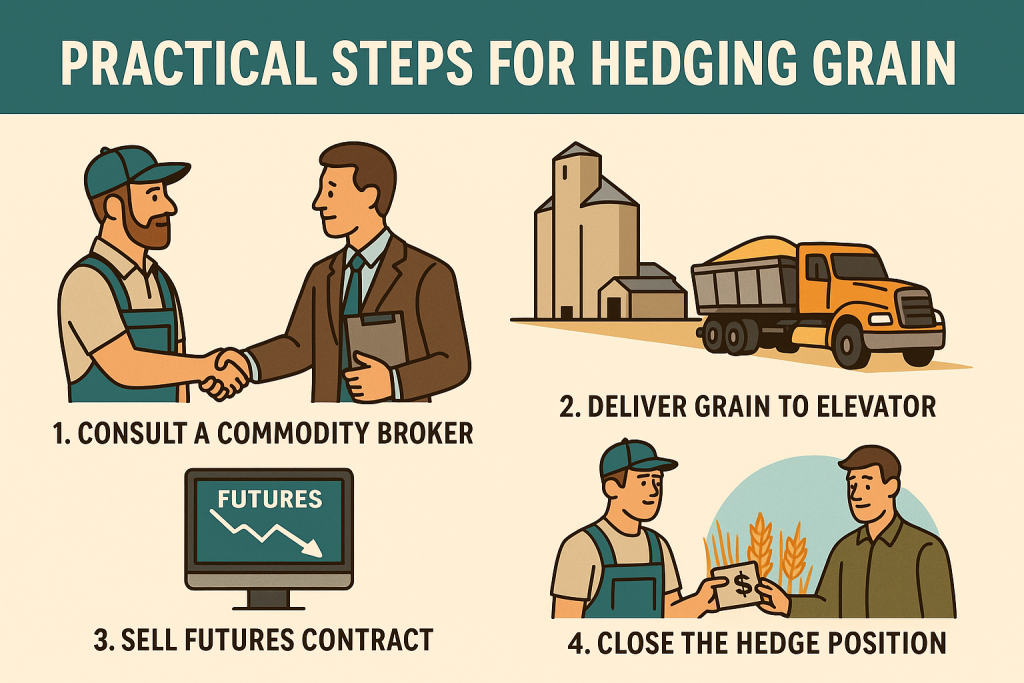
- Farmers consult commodity brokers to discuss marketing goals and risk tolerance.
- Grain is delivered to the local elevator, which purchases the physical commodity and manages the storage capacity to handle incoming grain.
- The elevator sells futures contracts to hedge its position; simultaneously, the farmer takes a short futures position through the broker. If a principal is involved, they may execute trades for their own account, while brokers act on behalf of clients.
- Brokers monitor the margin account for each client and inform farmers of market changes or margin calls.
- Hedge positions are closed when the elevator completes the sale of grain, realizing the locked-in price. This sales transaction is a key step, and it may be executed by a principal trading for their own account or by a broker facilitating the sale for a client.
- Farmers receive payment based on the hedged price, adjusted for basis and fees.
Common Hedging Strategies
- Futures contracts: This strategy allows you to lock in a price for your grain ahead of time, reducing exposure to price fluctuations. The power of hedge positions lies in their ability to manage and mitigate market risk effectively.
- Basis contracts locking in the difference between local cash price and futures price: With basis contracts, you secure the basis while leaving the futures price open, providing flexibility in volatile markets. When entering into basis contracts, market participants assume certain risks related to price movements, as they take on the obligation to manage the futures component at a later date.
- Options strategies such as purchasing put options for price protection: Put options provide downside price protection while allowing for upside potential. However, the ability to use options effectively requires a solid understanding of market conditions and strategy execution.
Conclusion
Commodity brokers are essential in helping farmers hedge price risk when selling grain through elevators. By providing access to futures markets and expert advice, brokers enable farmers to stabilize cash flows and reduce exposure to market volatility. Collaborating closely with commodity brokers and grain elevators allows farmers to make informed marketing decisions and potentially improve financial outcomes.

Frequently Asked Questions (FAQs)
Q1: What is the main role of a commodity broker in grain marketing?
A: Commodity brokers act as intermediaries who facilitate hedging strategies using futures contracts and options, helping farmers and grain elevators manage price risk in the commodity markets.
Q2: How does hedging protect farmers when selling grain?
A: Hedging allows farmers to lock in a selling price by taking an opposite position in the futures market, which offsets potential losses from price declines in the cash market.
Q3: Why do grain elevators use futures contracts?
A: Grain elevators use futures contracts to hedge their price risk, protecting themselves from adverse price movements after purchasing grain from farmers.
Q4: Can farmers access futures markets directly?
A: Many farmers rely on commodity brokers to access futures markets, as brokers provide expertise, market analysis, and the necessary infrastructure to trade futures contracts.
Q5: What are basis contracts, and how do they benefit farmers?
A: Basis contracts lock in the difference between the local cash price and futures price, allowing farmers to secure the basis while keeping futures prices flexible, which can be advantageous in volatile markets.
Q6: What is the difference between a commodity broker and a futures commission merchant?
A: A commodity broker executes trades on behalf of clients and provides market advice, while a futures commission merchant (FCM) holds client funds and manages margin accounts for futures trading.
Q7: How do options strategies help in grain hedging?
A: Options provide price protection while allowing farmers to benefit from favorable price movements, offering flexibility beyond traditional futures contracts.
Q8: What should farmers consider when choosing a hedging strategy?
A: Farmers should assess their marketing goals, risk tolerance, and consult with commodity brokers to select strategies that best align with their financial objectives, risk tolerance and market outlook.
