
TL;DR (Key Takeaways):
Fertilizer costs have risen 30–80% since 2021, pressuring farm profitability.
Soil testing helps apply nutrients precisely, reducing waste and input costs.
Alternative and organic fertilizers, such as compost or manure, can lower costs.
Crop rotation and companion planting naturally improve soil fertility.
Smart purchasing and timing (bulk buying, seasonal discounts) reduce costs.
Precision ag technology—drones, sensors, GPS—boosts efficiency and yield.
Water management improves fertilizer uptake and limits runoff losses.
Hedging with futures contracts provides financial stability amid market volatility.
Working with a licensed commodity broker helps align hedging strategies with farm budgets and fertilizer plans for more predictable results.
Introduction
Rising fertilizer costs, which have increased by 30-80% since 2021, have pressured farmers worldwide to rethink input strategies. Fertilizer expenses can account for 40-60% of total farming costs, making cost management critical to profitability. This guide presents seven practical strategies to reduce fertilizer expenses by 25-50% while maintaining crop yields and soil health through precision management, alternative nutrient sources, strategic purchasing, and technology.
Understanding Fertilizer Cost Drivers
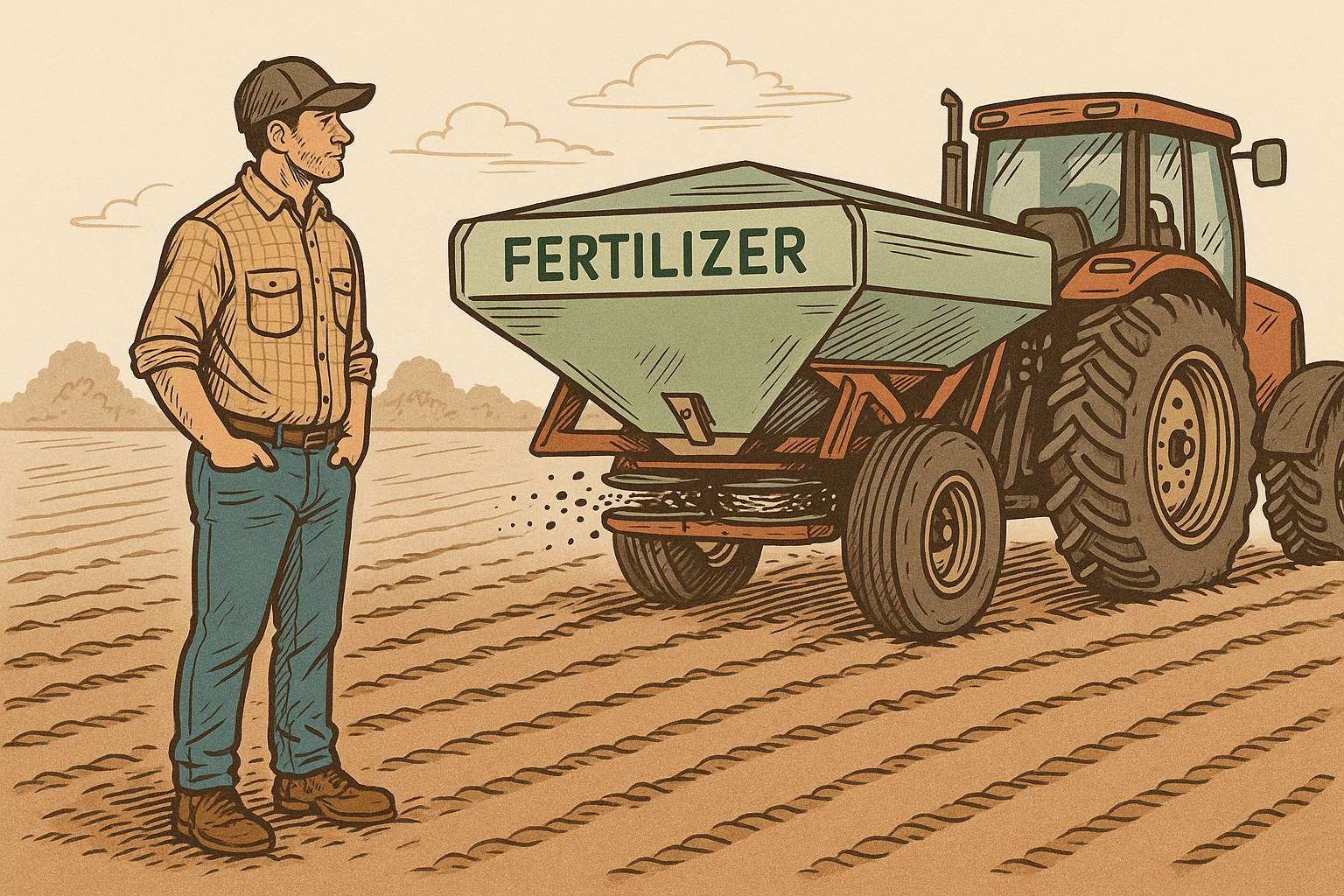
Fertilizer prices are influenced by energy costs, supply chain disruptions, and geopolitical factors. Fertilizers are energy-intensive to produce, making their prices sensitive to fluctuations in oil and natural gas prices. In traditional farming, the over-application of fertilizer as insurance has led to waste and increased costs. Precision management can reduce input costs and environmental impact by applying nutrients based on actual crop and soil needs.
Soil Testing and Precision Application
Regular zone-specific soil testing every 2-3 years identifies nutrient levels and guides targeted fertilizer application. These tests measure the precise nutrient content in the soil, allowing farmers to assess the effectiveness of previous fertilizer applications and make data-driven decisions. Soil tests costing $15-25 per test can save $50-100 per acre by reducing unnecessary fertilizer use. GPS-guided spreaders enable variable rate application, improving efficiency by 15-20%. Digital mapping tools help track application rates and optimize future purchases.
Hedging Crops to Manage Fertilizer Costs
Hedging with futures contracts or options allows farmers to lock in crop prices ahead of harvest, stabilizing income and offsetting volatility in fertilizer costs. This financial certainty helps plan fertilizer investments wisely, avoiding overspending or underinvestment. By managing their money more effectively through hedging, farmers can allocate funds more efficiently and reduce unnecessary financial risk. Farmers new to hedging should start small, consult trusted advisors, monitor market trends, and combine hedging with other cost-saving strategies. Hedging not only manages fertilizer costs but also protects against unpredictable crop prices, supporting long-term financial health.
We’re Farmers Too. That’s Why We Understand the Markets That Move You.
As our commodities broker David likes to say,
At Ag Optimus, we’re not just commodity brokers — we’re farmers ourselves. We know what it means to face higher fertilizer, feed, and fuel costs, and how quickly those changes can impact your bottom line.
That’s why we help producers like you use the futures markets to hedge input costs and protect profits. Whether it’s locking in feed prices, managing grain sales, or planning for next season’s volatility, we’ll work with you to build a strategy that fits your operation.
Because when your livelihood depends on the land, you need someone who understands both the fields and the futures.
📞 Toll Free: (800) 944-3850
📞 Phone: (712) 545-0182
🌐 www.agoptimus.com
“You can’t control the weather or Washington — but you can hedge.”
Alternative and Organic Nutrient Sources
Organic fertilizers from animal products (manure, bone meal) and plant derivatives (composted fruit, seeds) offer cost-effective alternatives to synthetic fertilizers, enhancing soil health. Many of these materials, such as manure, are derived from animal feed sources or serve as feed for soil microbes, supporting nutrient cycling in the ecosystem. Composted manure costs $20-40 per ton, compared with $600-800 for synthetic fertilizers. Leguminous cover crops fix nitrogen biologically, reducing the need for purchased fertilizer by 40-60 pounds per acre annually. Municipal and industrial waste streams provide additional nutrient sources at lower costs.
Strategic Crop Rotation and Companion Planting
Incorporating nitrogen-fixing crops in 3-4 year rotations replenishes soil nitrogen, reducing synthetic fertilizer requirements. Crop rotations improve soil fertility and pest management; combining different crops in rotation or through companion planting optimizes nutrient use and pest control. Companion planting, such as beans with corn, enhances nutrient availability and land use efficiency.
Smart Purchasing and Timing Strategies
Bulk purchasing cooperatives offer 10-20% volume discounts, lowering per-unit costs and giving participants the advantage of lower expenses compared to individual purchases. Seasonal pricing, especially for fall purchases, can save 15-25%, though storage costs and risks must be managed. Fixed-price contracts and futures options offer budget certainty and protect against price spikes.
Technology Solutions for Efficiency
Precision agriculture technologies, such as drone and satellite monitoring, soil sensor networks, and fertigation systems, enable targeted fertilizer application and real-time crop health assessment. These tools improve nutrient use efficiency by 15-40%, reducing waste and costs and increasing the value per unit of fertilizer applied.
Water Management and Conservation
Efficient irrigation systems (drip or sprinkler) deliver water and nutrients directly to the roots, enhancing nutrient uptake and reducing runoff. Irrigation water also has other uses beyond crop cultivation, such as cooling livestock or reducing dust. Conservation practices like crop rotation and mulching retain soil moisture and prevent nutrient loss. These methods support sustainable food production and environmental protection.
Monitoring and Evaluating Fertilizer Use
Monitoring and evaluating fertilizer use is a cornerstone of sustainable agriculture and responsible food production. As highlighted by the World Health Organization, proper fertilizer management is essential not only for maximizing crop yields but also for protecting human health and the environment. In today’s world, where farmland is harvested extensively to meet the demands of a growing population, farmers must pay close attention to the types and amounts of fertilizers applied to their crops.
Domesticated plants, such as wheat and oil crops, have specific nutrient requirements that vary by species, soil type, and climate. By regularly assessing fertilizer use, farmers can tailor their management practices to the unique needs of each crop and field. This careful approach reduces the risk of over-fertilization, which can lead to soil degradation, water pollution, and increased production costs. It also supports the development of new crop varieties and innovative farming methods that are better suited to the challenges of modern agriculture.
Effective monitoring involves more than just initial soil testing. It requires ongoing evaluation throughout the growing season, using tools like crop scouting, digital mapping, and precision agriculture technologies. These practices help identify nutrient deficiencies, monitor plant health, and ensure fertilizers are applied only where and when needed. For example, using real-time data from soil sensors or drone imagery allows farmers to make informed decisions that protect both their crops and the planet.
The benefits of diligent fertilizer monitoring extend beyond individual farms. By adopting these practices, farmers contribute to a more sustainable global food system, reducing the environmental impact of agriculture and safeguarding natural resources for future generations. As the world faces increasing pressure on land and resources, the role of responsible fertilizer management in food production and environmental science will only grow in importance.
In summary, monitoring and evaluating fertilizer use is vital for efficient crop production, environmental protection, and the long-term success of agriculture. By integrating these practices into their management strategies, farmers can lead the way toward a more sustainable and profitable future for themselves and the world.
Conclusion
By adopting precision soil testing, alternative nutrient sources, crop rotation, strategic purchasing, technology, and efficient water management, farmers can significantly reduce fertilizer costs while maintaining yields and soil health. Incorporating futures hedging adds financial stability amid market volatility. These strategies promote sustainable, profitable farming and contribute to global food security.
Frequently Asked Questions (FAQs) about Saving on Rising Fertilizer Costs
Q1: How can precision soil testing help reduce fertilizer costs? Precision soil testing identifies specific nutrient needs across different field zones, allowing farmers to apply only the necessary amount of fertilizer. This targeted approach reduces waste and potentially lowers expenses by up to 33%, while maintaining crop yields and soil health.
Q2: What are some cost-effective alternative nutrient sources to synthetic fertilizers? Organic amendments such as composted manure, bone meal, and leguminous cover crops provide nutrients at significantly lower costs than synthetic fertilizers. Examples of alternative nutrient sources include green manure, fish emulsion, and rock phosphate. These alternatives also improve soil structure and support sustainable farming practices.
Q3: How does crop rotation contribute to fertilizer savings ? Incorporating nitrogen-fixing crops like legumes in rotation cycles naturally replenishes soil nitrogen, reducing the need for synthetic nitrogen fertilizers by 40-60 pounds per acre. Crop rotation also enhances soil fertility and pest management.
Q4: What role does technology play in optimizing fertilizer use? Technologies such as GPS-guided application equipment, drone and satellite monitoring, and soil sensor networks enable precise fertilizer application and real-time crop health assessment. These tools have the potential to improve nutrient use efficiency by 15-40%, leading to cost savings and environmental benefits.
Q5: How can strategic purchasing reduce fertilizer expenses? Farmers can benefit from bulk purchasing cooperatives, seasonal price timing, and futures contracts to secure volume discounts and protect against price volatility. These strategies help manage input costs and improve financial planning.
Q6: What is hedging with futures contracts, and how does it help farmers manage fertilizer costs? Hedging with futures contracts locks in a price for crops before harvest, providing income stability despite fluctuations in fertilizer prices. This financial tool helps farmers plan fertilizer investments with greater confidence, reducing risk and boosting profitability in volatile markets.
Q7: Why is efficient water management important for fertilizer cost savings? Efficient irrigation systems, such as drip and sprinkler irrigation, deliver water and nutrients directly to plant roots, enhancing nutrient uptake and reducing runoff and leaching. This synergy increases crop productivity and lowers input waste.
Q8: Are there government programs that support farmers in reducing fertilizer costs? Many governments offer subsidies, grants, and extension services to help farmers adopt precision agriculture technologies, conservation practices, and efficient irrigation systems. These programs facilitate cost savings and promote sustainable agriculture.