
Introduction
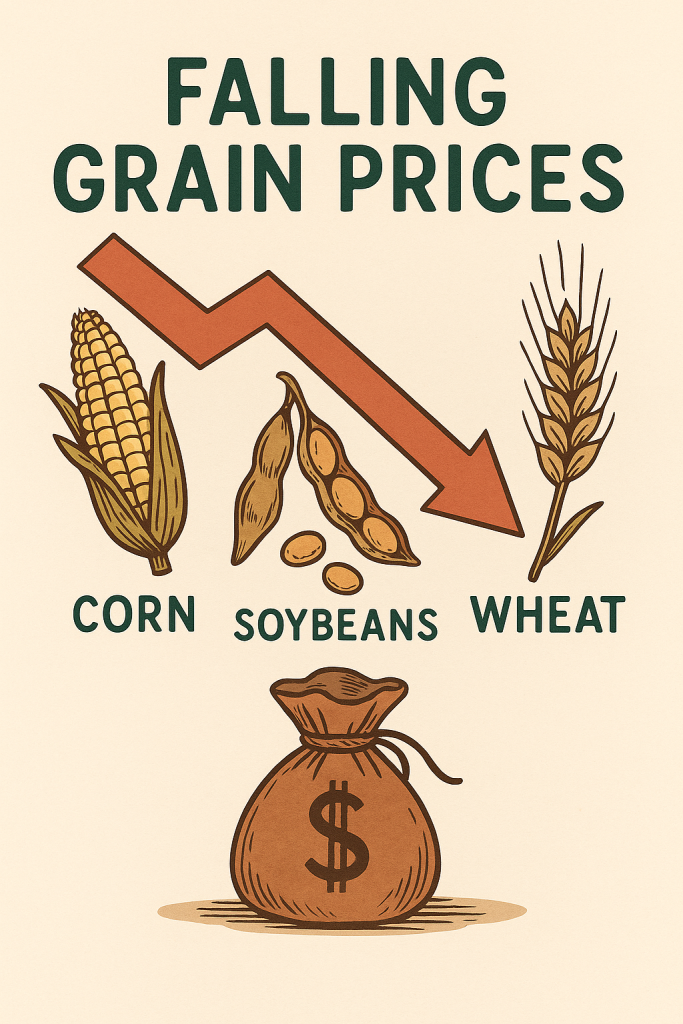
Grain prices fall when supply outpaces demand, creating market conditions in which corn and soybean prices fall below average production costs, squeezing farm profitability and forcing farmers to sell crops at reduced margins. This comprehensive analysis examines the complex factors driving declining market values for corn, soybeans, and wheat, which directly impacts farm operations and business decisions.
What This Guide Covers
This guide explores supply-and-demand fundamentals, global market influences, seasonal patterns, and storage economics that affect grain prices. We examine both immediate price pressures and long-term market trends that determine when farmers can sell crops profitably and when market conditions force difficult decisions.
Who This Is For
This guide is designed for farmers, farm managers, commodity traders, and agribusiness professionals dealing with price volatility. Whether you’re managing day-to-day operations on a single farm or overseeing multiple farm operations, you’ll find practical insights for navigating low-price environments and protecting invested capital in farm machinery and farm buildings.
Why This Matters
Understanding price drivers helps optimize selling decisions, manage risk, and protect farm profitability during market downturns. Many farmers face cash flow challenges when grain prices fall, making it essential to understand the factors behind price movements and how analyzing past market trends or past prices can help plan harvesting and marketing strategies effectively.
What You’ll Learn:
- Supply-demand fundamentals governing corn and soybean prices
- Global economic factors are creating downward price pressure
- Seasonal price patterns affecting harvest marketing decisions
- Strategic responses to protect farm business profitability during low-price periods
Understanding Grain Market Fundamentals
Grain pricing mechanisms operate through commodity markets where supply and demand forces establish values for corn, soybeans, and wheat that farmers produce.
Agricultural markets operate on the principle that prices reflect the balance between crop production volumes and consumption needs across the food, feed, and fuel sectors. When farmers manage large harvests that exceed demand growth, market conditions typically drive prices lower as buyers gain negotiating leverage. Another factor, such as interest rates, can also influence agricultural marketing strategies and price risks, affecting decisions on crop sales and financial planning.
Farm management decisions directly connect to these market dynamics because grain sales generate the cash flow needed to cover costs for fertilizers, heavy machinery maintenance, and other farm operations. These decisions are part of the overall farm operation, which involves organizing and managing all activities to maximize production and profit. Understanding how markets establish prices helps farmers plan when to sell crops versus hold grain on farm storage or in commercial storage. The proportion of crops already sold also impacts market dynamics and influences future selling strategies.
Understanding how markets establish prices helps farmers plan. Considering the environment is important for long-term sustainability in farm management and marketing decisions. Social sciences help explain the human and community factors that influence farm management and market decisions.
Supply-Side Factors
Large harvest yields and record production levels create oversupply, driving grain prices lower. When weather events favor crop production across major growing regions, the resulting bumper harvests flood markets with more grain than consumers and livestock operations can immediately absorb. Plant selection and planting practices also play a crucial role in determining yield outcomes, as choosing the right plant varieties and optimizing planting strategies can significantly impact overall crop production.
This connects to farm profitability because higher production doesn’t automatically translate to higher profits when prices fall faster than yields increase. One farmer might harvest 200 bushels per acre instead of 150, but if corn prices drop from $6.00 to $4.50 per bushel, total revenue actually declines despite the yield increase.
Additionally, local ethanol plants can influence grain demand and basis levels, which, in turn, affect crop market prices.
Demand-Side Influences
Changes in export demand from major importing countries create significant price volatility in commodity markets. When countries like China reduce grain purchases due to economic slowdowns or trade tensions, the reduced demand forces grain to seek alternative markets at lower prices.
Building on supply factors, demand shifts amplify price movements because grain markets must clear existing production regardless of price levels. Domestic consumption for animal health programs, livestock feed, and food processing provides a baseline demand floor. The number and types of animals raised on farms, including cattle and sheep, play a crucial role in driving demand for feed grains. Management practices for these animals, such as improving animal health and productivity, directly influence the volume of grain required for livestock operations.
Corn ethanol demand plays a significant role in supporting corn prices by creating a steady market for grain. Ethanol production consumes a substantial portion of U.S. corn, linking energy policies and fuel markets to agriculture. Fluctuations in ethanol demand, influenced by regulatory changes and fuel consumption trends, directly impact corn prices and farm profitability.
Money Flow and Its Impact on Grain Prices
Money flow plays a critical role in determining grain prices by influencing market liquidity and investor behavior. When capital flows into agricultural markets, driven by investors seeking returns from farm products or commodities, prices tend to rise as demand for grain futures and related securities increases. Conversely, when investors withdraw funds, perhaps due to better opportunities elsewhere or rising interest rates, reduced investment can lead to lower grain prices. This influx or withdrawal of funds affects not only futures markets but also cash prices received by farmers. Understanding money flow patterns helps farm managers anticipate price trends and make informed marketing decisions that protect farm business profitability.
Agricultural Economics Overview
Agricultural economics is at the heart of effective farm management, guiding farm managers as they navigate the complex landscape of modern agriculture. By understanding the economic principles that drive corn and soybean prices, farm managers can make informed decisions that directly impact the profitability and sustainability of their farm business. Every decision—from investing in farm machinery and maintaining farm buildings to allocating resources for crop production—requires careful consideration of costs, risks, and potential returns.
Efficient use of land, labor, and capital is essential for maximizing crop yields and minimizing waste. Many farmers must also manage their livestock’s health, balancing feed costs, animal health needs, and the risks posed by unpredictable weather events. The value of invested capital in equipment and infrastructure requires farm managers to constantly assess whether their resources are being used to their fullest potential.
Agricultural economics also helps farmers determine the best times to sell crops, manage cash flow, and plan for future investments. By keeping a close eye on market conditions and understanding the factors that influence prices, farmers can better manage day-to-day farm operations and protect their business from unexpected downturns. Ultimately, a solid grasp of agricultural economics empowers farmers to make strategic decisions that support long-term growth and resilience in a competitive market.
Primary Drivers of Low Grain Prices
Market fundamentals establish the framework, but specific economic and seasonal factors create the immediate price pressures that challenge farm management strategies and threaten profit margins for crop production operations. During a recent market downturn, both grain prices and basis levels fell sharply, reflecting the impact of rapid grain bin cleanup and shifting market conditions.
It is crucial to monitor market conditions each week to respond quickly to sudden price changes.
Global Economic Conditions
Currency exchange rates significantly affect international grain competitiveness, with a strong U.S. dollar making American grain more expensive for foreign buyers. When the dollar appreciates against major currencies, countries that purchase U.S. grain face higher local-currency costs, reducing demand and pushing prices lower for American farmers.
Economic slowdowns in major economies reduce industrial demand for grain-based products and limit income growth that drives food consumption. Interest rate changes impact commodity investment flows, with higher rates often drawing money away from agricultural markets and into securities with guaranteed returns, reducing speculative demand that supports grain prices.
Seasonal Market Patterns
Harvest pressure during peak marketing months from September through December typically creates downward price pressure as farmers rush to sell crops for immediate cash flow. Storage capacity limitations force many farmers to accept lower prices rather than pay commercial storage costs that might exceed potential price gains.
Unlike demand factors that vary unpredictably, seasonal patterns create recurring challenges for farm operations. Most farmers experience concentrated income during the harvest season, when grain sales generate the majority of annual revenue, but this timing coincides with peak market supply and typically lower prices.
Transportation and Infrastructure
Rising transportation costs reduce local basis levels, meaning farmers receive less money for grain even when futures prices remain stable. Export terminal bottlenecks limit overseas shipment capacity, backing up grain in domestic markets and creating oversupply conditions that depress local prices.
Regional infrastructure constraints affect price discovery by limiting farmers’ ability to access the best markets for their grain. Farmers in areas with limited rail access or with elevator competition often face wider basis levels, reducing the prices they receive relative to benchmark commodity futures.
Key Points:
- Oversupply from record harvests creates immediate price pressure that reduces farm incomes
- Reduced export demand compounds domestic storage challenges and forces grain into lower-priced markets
- High input costs for fertilizers and machinery squeeze profit margins during low-price periods
Transition: Understanding these price drivers enables farmers to develop strategic responses that protect farm business profitability during challenging market conditions.
Technology and Innovation in Agriculture
The rapid advancement of technology and innovation is reshaping the way farmers approach farm management and crop production. Today, many farmers are leveraging precision agriculture tools—such as GPS mapping, satellite imagery, and soil sensors—to optimize planting, fertilization, and harvesting. These technologies enable more efficient use of resources, reduce input costs, and help ensure that every acre of land is producing at its highest potential.
Farm management software has become an indispensable tool for tracking day-to-day operations, from equipment maintenance schedules to monitoring animal health and responding to shifting market conditions. For example, one farmer who adopted digital record-keeping and automated machinery maintenance saw a significant reduction in downtime and repair costs, leading to higher profits and smoother farm operations.
Innovations like drones, autonomous tractors, and artificial intelligence are further transforming the landscape of farming. These tools allow for real-time monitoring of crop health, precise application of fertilizers and pesticides, and even automated harvesting, all of which contribute to increased productivity and lower labor costs. Online marketplaces and direct-to-consumer platforms are also opening new avenues for farmers to sell their products, improving market access and boosting farm business income.
Seed technology significantly influences grain prices by affecting crop yields, production costs, and market supply. Advanced seed varieties that are more resistant to pests, diseases, and environmental stresses typically yield higher, more reliable yields. This increased productivity can lead to larger harvests, which, when widespread, may contribute to market oversupply and downward pressure on grain prices. Conversely, improved seed efficiency can reduce input costs such as pesticides and water, helping farmers maintain profitability even when prices are low. Ultimately, seed technology shapes supply dynamics and cost structures, playing a crucial role in the fluctuations of corn, soybean, and other grain prices.
As technology continues to evolve, it is clear that embracing innovation is key to staying competitive in agriculture. Farmers who invest in new tools and techniques are not only improving their own operations but also setting the stage for a more sustainable and profitable future for the entire industry.
Market Analysis and Strategic Responses
Building on knowledge of price drivers, farmers can implement specific management strategies to minimize losses and position farm operations for recovery when market conditions improve.
Step-by-Step: Price Risk Management During Downturns
When to use this: Farmers facing immediate selling pressure who need to balance cash flow needs against potential price recovery.
- Analyze storage costs versus immediate sale prices: Calculate daily storage charges, insurance costs, and quality deterioration risks, and compare them with expected price premiums for delayed sales.
- Monitor local basis levels and transportation availability: Track the difference between local cash prices and futures prices to identify optimal selling windows when the basis strengthens.
- Evaluate forward contracting opportunities for future delivery: Consider pre-selling a portion of next year’s crop at current futures prices to lock in known profit margins.
- Implement crop insurance and hedging strategies: Use revenue protection insurance and futures contracts to establish price floors that protect against further declines.
- Hedge using short selling: Farmers can hedge against falling grain prices by taking a “short” position in futures markets. This involves selling futures contracts on grain they expect to harvest. If grain prices drop, the losses in the physical market are offset by gains in the futures position, helping stabilize revenue. This strategy allows farmers to manage price risk by locking in prices before harvest, thereby reducing exposure to market volatility.
- Call a Trusted Commodity Broker. Having a trusted commodity broker on standby is essential for effectively managing the risks associated with low grain prices. Brokers provide valuable market insights, timely advice, and access to futures and options contracts that can help farmers hedge against price declines. By working closely with a broker, farmers can develop tailored marketing strategies, respond quickly to market fluctuations, and protect the profitability of their farm business during challenging price environments. Establishing this relationship before low-price situations arise ensures farmers are prepared to act decisively when market conditions demand it.
Looking for a Commodity Broker who understands Grains and Crops?
Protect your Crop Prices Through Hedging.
Call Ag Optimus.
Toll Free: (800) 944-3850
Phone: (712) 545-0182
WWW.AGOPTIMUS.COM
Comparison: Immediate Sale vs Extended Storage
| Feature | Immediate Sale | Extended Storage |
|---|---|---|
| Cash Flow | Immediate funds for farm operations | Delayed income requiring bridge financing |
| Price Risk | Eliminates further downside exposure | Maintains upside potential but increases risk |
| Storage Costs | No ongoing expenses | $0.15-0.25 per bushel monthly plus insurance |
| Quality Risk | No deterioration concerns | Potential moisture loss and pest damage |
| Capital Requirements | Frees up invested capital | Ties up working capital in inventory |
Extended storage makes sense when expected price increases exceed storage costs and quality risks, but immediate sales provide certainty and cash flow for ongoing farm operations. Farmers should calculate the breakeven price appreciation needed to justify storage costs before making marketing decisions.
Transition: Even with optimal marketing strategies, farmers face common challenges that require specific solutions during low-price environments.
Common Challenges and Solutions
Low grain prices create operational and financial pressures that test farm management capabilities and require adaptive strategies to maintain farm business viability.
Challenge 1: Storage Capacity Limitations
Solution: Coordinate with local elevators for alternative storage arrangements and explore on-farm storage expansion to reduce harvest pressure selling.
Farm buildings can be modified to provide temporary grain storage, while commercial storage agreements allow farmers to delay sales without immediate capital investment in new facilities. Keeping track of storage availability throughout the harvest season helps farmers plan marketing strategies that avoid forced sales during peak pressure periods.
Challenge 2: Cash Flow Pressure from Delayed Sales
Solution: Utilize marketing loans and advance payment programs to maintain operating funds while holding grain for better prices.
USDA marketing assistance loans provide immediate cash based on loan rates while allowing farmers to retain ownership and benefit from price increases. These programs efficiently use government support to bridge cash flow gaps without forcing premature grain sales at unprofitable prices.
Challenge 3: High Input Costs Versus Low Grain Prices
Solution: Adjust next season’s input strategies and explore cost-saving alternatives to maintain profit margins despite reduced grain revenues.
Farm managers should evaluate fertilizer timing, seed selection, and equipment maintenance schedules to reduce costs without compromising yield potential. Precision agriculture tools help optimize input applications for maximum return on investment when price margins are compressed.
Transition: These challenges require ongoing attention, but understanding their solutions helps farmers maintain business stability during difficult market cycles.
Conclusion and Next Steps
Understanding why grain prices decline empowers farmers to make informed decisions about marketing timing, risk management, and operational adjustments to protect farm profitability during market downturns. Price cycles are inherent to agriculture, but strategic planning helps farms survive low-price periods and capitalize on market conditions when they improve.
To get started:
- Monitor daily basis levels and storage costs to identify optimal selling opportunities in your local market
- Evaluate marketing alternatives and risk management tools, including crop insurance, forward contracts, and government loan programs
- Plan next season’s production costs based on current price trends and adjust input strategies to maintain profitability
Frequently Asked Questions (FAQ)
1. Why do grain prices go low even when crop yields are high?
Grain prices often fall when supply exceeds demand. High crop yields increase market supply, which can outpace consumption needs, driving prices down. This oversupply puts pressure on prices, especially if demand from export markets or domestic consumers does not increase in step.
2. How do weather events impact grain prices?
Weather events can affect both supply and demand. Favorable weather can lead to bumper crops, increasing supply and lowering prices. Conversely, adverse weather can reduce yields, tightening supply and potentially increasing prices. Unpredictable weather also increases the risk in farm management decisions.
3. What role does storage capacity play in grain pricing?
Limited storage capacity forces many farmers to sell their grain quickly after harvest, often at lower prices due to market glut. Having adequate on-farm or commercial storage allows farmers to hold grain and sell when prices improve, but storage comes with costs and risks such as quality loss.
4. How can farmers manage price risk during low grain price periods?
Farmers can use strategies like forward contracting, crop insurance, and futures market hedging to protect against price volatility. These tools help lock in prices or provide financial protection, reducing the impact of sudden price drops on farm profitability.
5. Why is having a trusted commodity broker important for farmers?
A trusted commodity broker provides valuable market insights, timely advice, and access to futures and options contracts. They help farmers develop tailored marketing strategies, respond quickly to market changes, and manage price risks effectively, which is essential during periods of low grain prices.
Disclaimer: Futures and cash market prices do not always align, and hedging strategies may not fully offset losses or guarantee profitability. Market conditions, basis changes, and timing differences between futures and cash transactions can impact results. Producers should carefully evaluate their financial objectives and consult with qualified advisors before implementing any risk management or hedging program.