
Agri Blog

Weekly COT Update: Managed Money Drives Corn, Soybean, and Livestock Markets Amid USDA Report Impact

Author: Author: Nathan Harris, Ag Optimus, Akron, IA Branch

COT data was released after yesterday’s close, showing money flow by reportable traders as of last Tuesday (1/7). 

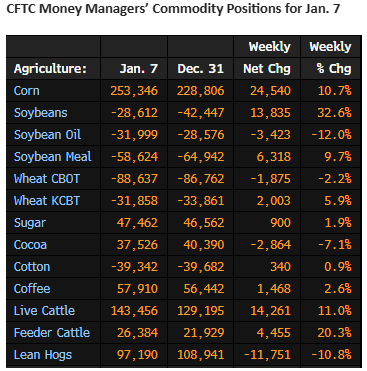
The table below provides a look at “Managed Money” positions. These funds have a tendency to drive the market as their trade flow can overwhelm the small spec/hedge crowd. 

Some key notes– 

MM was shown net long 253k corn and short 28k beans as of Tuesday, BUT major buying has taken place since then. The USDA report provided us with some fireworks, and funds have reacted to lower 2024 yields by buying the market in a big way. 

The livestock markets have been a managed money playground over the last few months. Last week they continued to push the cattle complex, taking their LC position to a net long 143k, and FC to long 26k (a new record by over 4k). In the hog market we’ve seen them start to pull back their long exposure as net sellers of 11k last week. Their net long in hogs is still 97k. 

Funds can be the farmers worst enemy, or best friend! Their buying of Ag markets in late 2024 has given producers a shot in the arm. A good friend of mine likes to say, “you’ve gotta sell your peanuts when the circus is in town”. When the buy side money flow stops, so too will the rally in flat price. Be prepared!

Have a great day!

Nathan

Source: ADMIS
RECENT POSTS

How and Why Margin Calls Occur: A Producer’s Guide to Liquidity

TL;DR — The AgOptimus Executive Summary The Reality: Margin calls are liquidity events, not penalties. They occur because futures markets settle daily, while physical crops sell seasonally. The Mismatch: A margin call does not mean a hedge is failing. It often means...

How to Pick the Right Hedge Month for Your Cattle

TL;DR — How to Pick the Right Hedge Month for Your Cattle Match your hedge month to when cattle will likely finish, not when the board looks best today. Weather, health, and feed performance influence finish dates — build flexibility into your plan. If cattle slip or...

Cattle on Feed Report Explained for Cattle Feeders

TL;DR The USDA Cattle on Feed (COF) report drives cattle futures because it reveals real supply: placements, marketings, and on-feed inventory. What matters isn’t the number itself—but how it compares to pre-report estimates. Heavy placements → bearish. Light...

How to Trade Futures Cattle Spreads for Hedging

Futures Cattle Spreads TL;DR A cattle spread is the price difference between two futures months; some feeders trade this difference, not the outright price. Spreads move because of real cattle fundamentals — carcass weights, placements, seasonal flows, packer demand,...