
Author: Nathan Harris, Ag Optimus, Akron, IA Branch
Good morning,
The COT data released Friday reflects reportable trader positions as of March 25th. Once again, it’s clear: money flow is king!(opinion)
📉 Grains: Funds Selling Across the Board
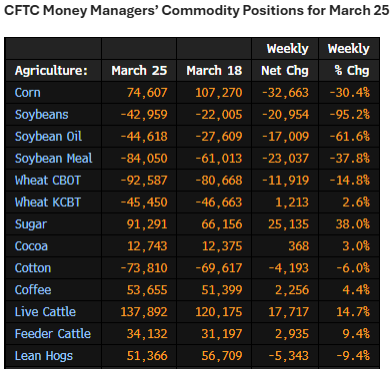
The table below shows Managed Money movement for the week ending March 25th.
✅ Funds were sellers of all CBOT grain/oilseed products
✅ Buyers of the cattle complex
- Corn: Funds are starting the growing season relatively neutral at 74k net long
- Soybeans: Funds hold a 42k net short, but we’ve seen some short covering since Tuesday
💡 In my opinion, beans are a sleeper. At some point this growing season, I believe funds will get spooked out of their short bias—especially if weather becomes a factor.
🐄 Cattle: Funds Still Charging In
The fund position in cattle continues to defy gravity:
- Feeder Cattle: Managed Money pushed to a new record 34k net long
- In our view, strong cash feeder prices support the move—but we believe caution is warranted. The door could get tight when funds decide to exit.
- Live Cattle: Funds held 137k net longs as of the report, and added significantly midweek. My estimate: 145k+ net long as of now.
⚠️ Positions are hefty, and timing is everything in these kinds of trades.
🐖 Hogs: Tariffs Cloud the Outlook
March was choppy, and the funds remain indecisive.
- The Quarterly Hogs & Pigs report showed less supply than expected
- But traders remain cautious due to tariff risks
💬 Some are calling this “liberation week”—we may finally get clarity on tariff implications.
- MM$ (managed Money) once held a record net long hog position in 2025
- Now reduced to a more manageable 51k net long as of March 25
📊 USDA Report Recap – March 31st
Monday’s report was tame compared to past March 31 fireworks:
- Corn:
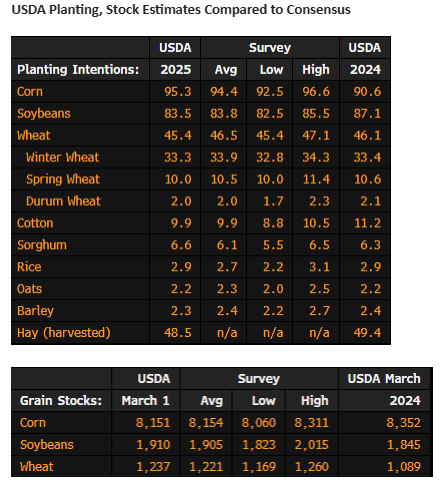
- Market absorbed the 95m+ acreage number well
- Reversed higher, supported by strong demand
- Notably, domestic corn usage was the largest in 20 years 🌽
- Wheat:
- Strong gains followed a drop in acreage expectations
- Total wheat acreage: 45.4m, second smallest since 1919!
- Funds remain short—this feels like a “fade them and out-wait them” kind of setup
- Soybeans:
- 83.5m acres—small enough to give us hope
- Any adverse growing season weather could send this market back into the teens
- I still think beans are a sleeper
- Consider upside calls for re-ownership of old crop
- Or “courage calls” for future coverage on new crop sales
Images: ADMIS
⚠️ Macro Watch: Tariffs in the Spotlight
Keep your head on a swivel. Tariffs are sure to dominate headlines the rest of the week, with Trump promising major announcements tomorrow.
Have a great day!
— Nathan
Have questions about your marketing strategy? Call Nathan today! 📞 712-435-7879