
Good Morning,
Overnight, soybeans rallied 18 cents after President Trump urged China to buy U.S. beans ahead of upcoming trade negotiation deadlines.
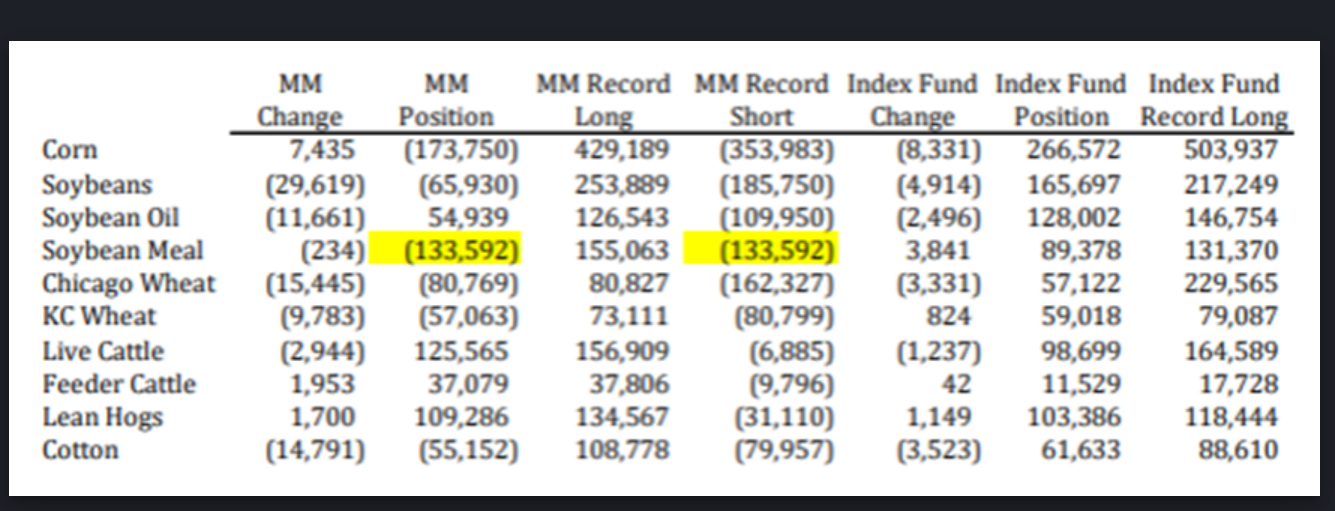
The bounce follows a week of fund selling in soybeans, with managed money now net short 65k contracts—alongside a net short of 173k in corn.
📅 WASDE report due tomorrow.
🌱 Grains
- Soybeans are higher on renewed trade talk momentum
- Funds holding sizable shorts in both beans and corn
- In our view, the WASDE release could be a volatility trigger
🐄 Cattle
Last week was extremely volatile, ending with a risk-off session on Friday.
Still, futures closed higher week-over-week despite a weaker cash market.
- Live cattle: Funds sold 3k contracts, trimming net long to 125k—still 30k shy of record length
- Feeder cattle: In my opinion, net long of 37k could prove bearish later in the year
🐖 Hogs
- Funds added lightly to lean hog positions
- August hogs expire this week
- The October contract still holds an $18 discount
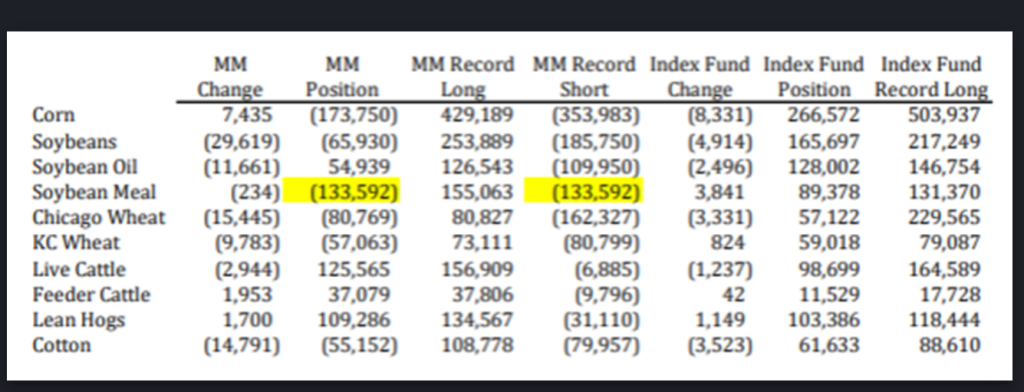
Source: ADMIS
Have a great week!
Have questions about your marketing strategy? Call Nathan today! 📞 712-435-7879
Best,
Nate