
Author: Nathan Harris, Ag Optimus, Akron, IA Branch
Good Morning!
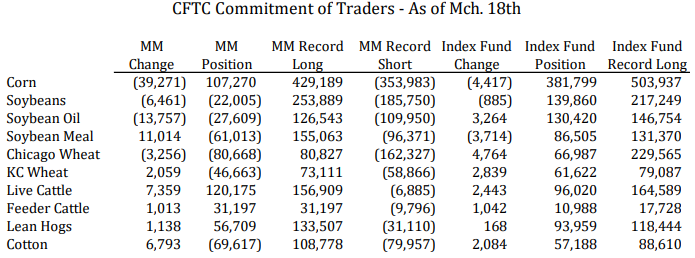
Friday’s CFTC Commitment of Traders report showed what we believe to be a clear trend:money is flowing out of grains and into cattle. See the table below for a full breakdown.
Image: ADMIS
🌽 Grains: Funds Keep Liquidating Corn & Adding to Bean Shorts
- Corn: Funds trimmed their net long position to just 107k
- Soybeans: Net 22k short, with additional shorts in meal and oil
📉 The entire bean complex is now under pressure from managed money.
We believe beans are the sleeper of 2025—and if weather becomes a concern during the growing season, we could see a sharp upside move.
Both corn and soybeans are now in a holding pattern, awaiting one of the year’s most impactful reports:
🗓️ USDA Prospective Plantings.
Expectations: More corn acres, fewer beans.
🐄 Cattle: Funds Keep Buying Into Strength
Managed money continues to build long positions:
- Week ending March 18th:
- +7k live cattle → net long 120k
- +1k feeder cattle → net long 31k
I suspect they added another 10k live and 1k feeders since then, based on open interest growth (+14k in live cattle over the last three sessions).
This appears to be fund buying met by commercial hedging.
⚠️ Friday’s price action could have been a warning sign for bulls, especially with month- and quarter-end approaching—some liquidation may be expected.
But…
🔥 Cattle On Feed data had bulls pounding their chests again:
- On Feed: 97.8%
- Placed: 82.2%
Have a great week!
Have questions about your marketing strategy? Call Nathan today! 📞 712-435-7879